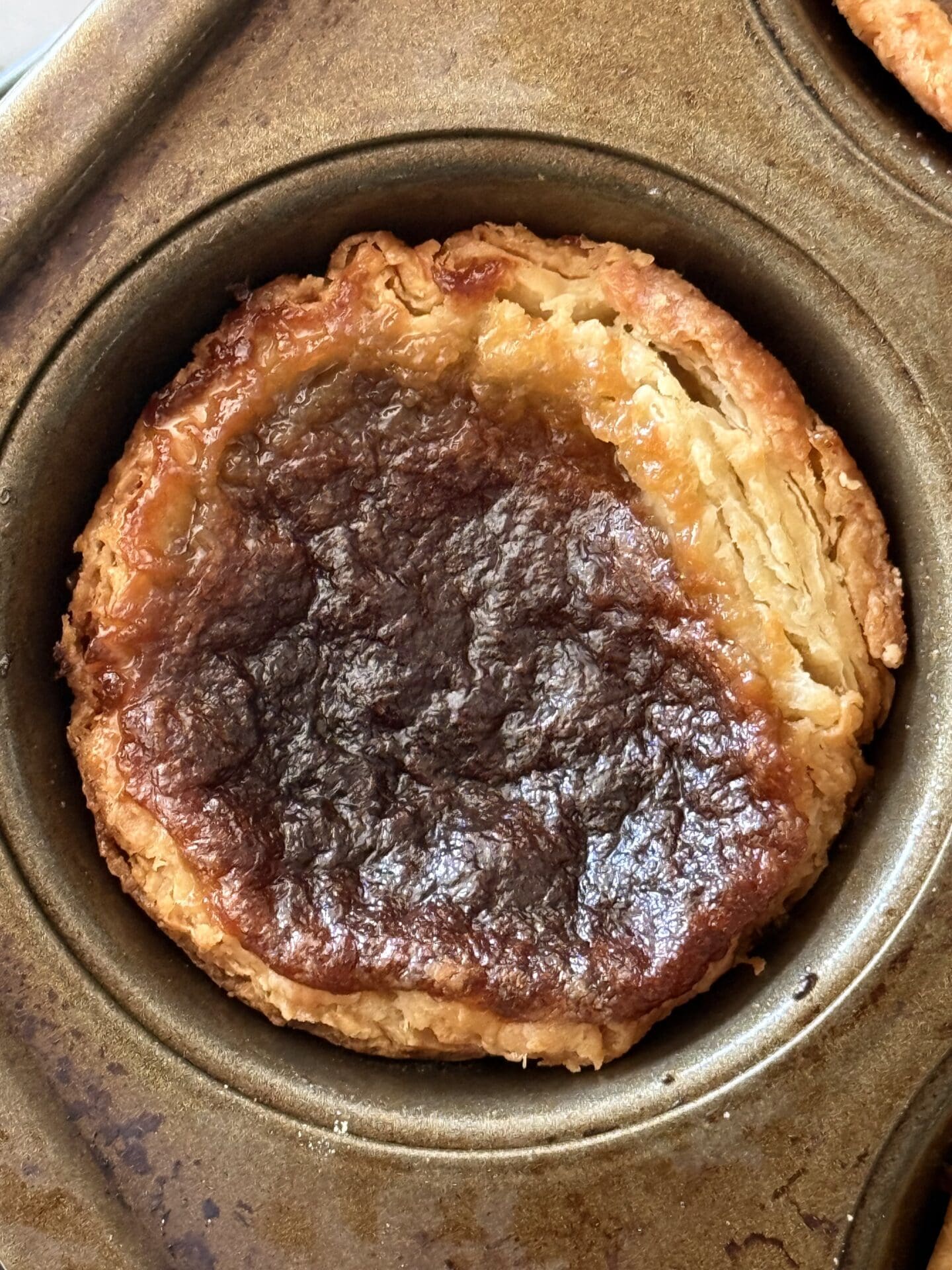
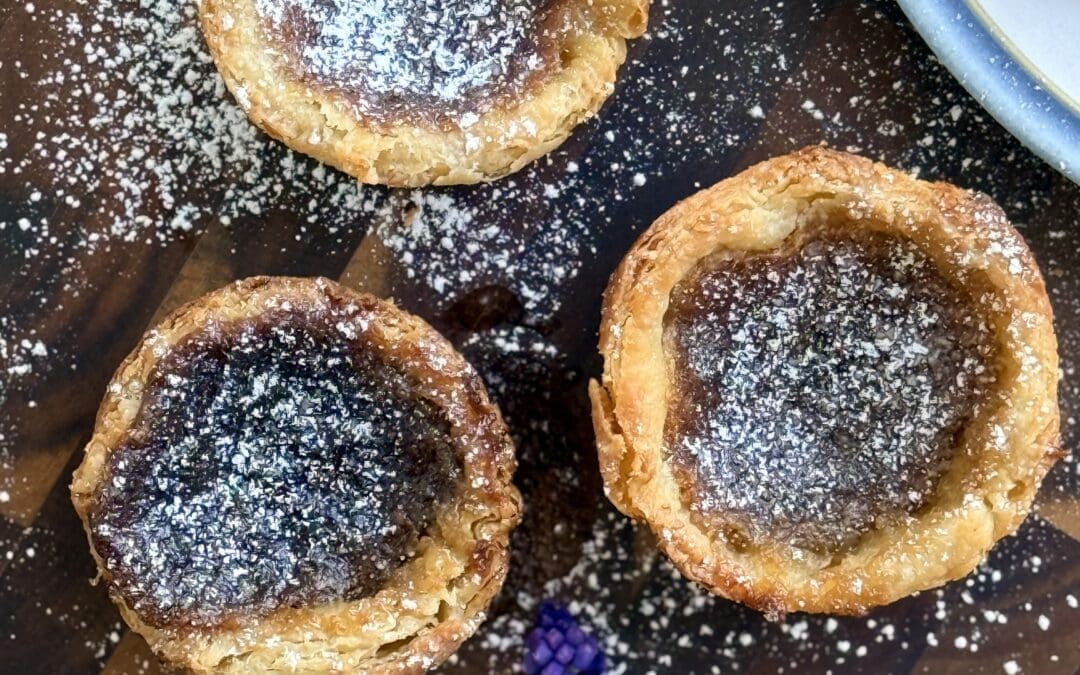
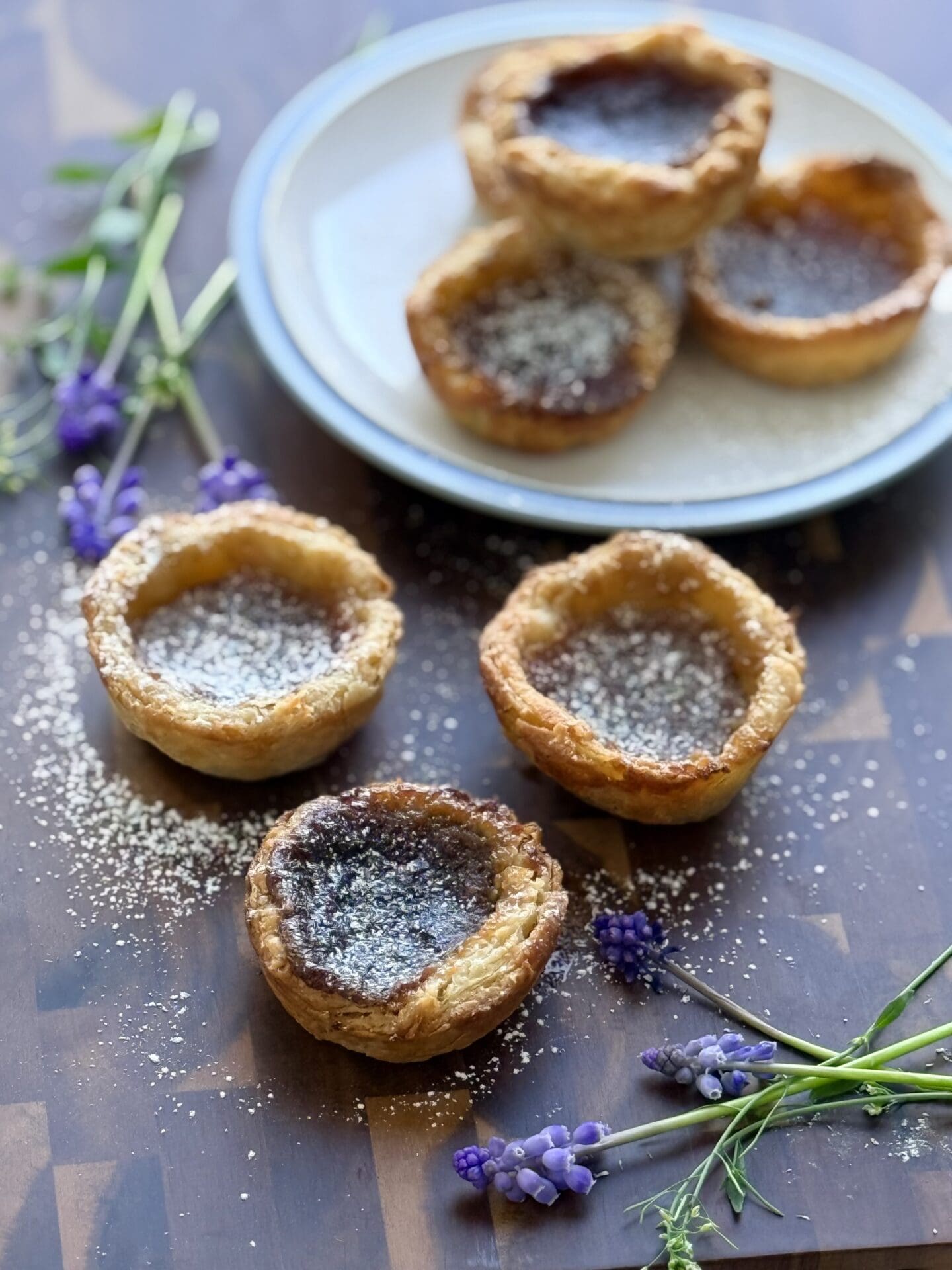
There’s something about summer at the Lakehouse that makes the simplest traditions feel unforgettable – long afternoons spent splashing in the lake, dinners with friends, and, of course, a batch of homemade butter tarts cooling on the counter. With a rich, caramel-like filling and a perfectly tender and oh-so-flaky shell, this recipe for my Lakehouse Butter Tarts strikes the perfect balance of sweet, buttery, and just a little indulgent – exactly what you want from this traditional Canadian treat. With simple pantry ingredients like butter, sugar, flour and eggs, this is the kind of dessert you can whip up at the cottage, whether you’re baking for family, friends, or just yourself with a cup of coffee and a lakeside view. Simple, nostalgic, and undeniably Canadian – these butter tarts are summer in every bite – and proof that a handful of simple pantry ingredients can come together to create something truly special.
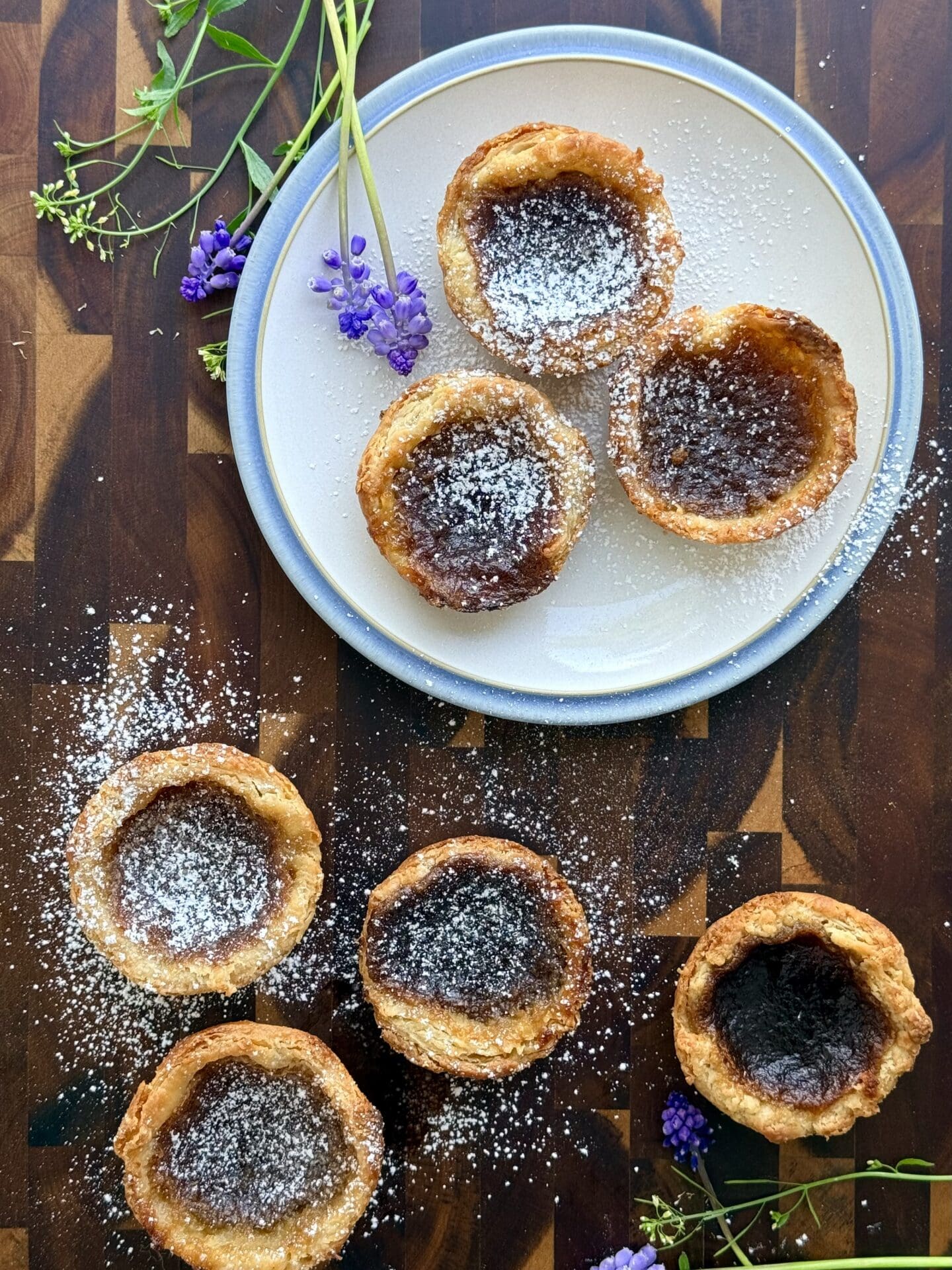
Maybe you call it a cottage, or a cabin, or a lakehouse, but regardless of the name, there’s one thing that’s common about summer cooking at the lake: it’s unhurried, a little improvised, and all about making the most of what you have on hand. That’s exactly why these butter tarts have become one of my go-to recipes for summer at the lake. It relies on simple pantry ingredients you can easily pack up, or already have in the cupboard, yet somehow turns them into something special: rich, goey, and full of that classic buttery sweetness. This recipe is also perfectly suited to cottage baking. With no special equipment required beyond a regular muffin pan, you can pull these together in even the most modest kitchen. No mixers, no specialty tools – just basic mixing bowls and wooden spoons or rubber spatulas. A round cookie cutter or biscuit cutter can be used to cut the pastry, but if you don’t have one, a drinking glass or a clean can will work just as well. While these butter tarts bake, the scent drifts through open windows, mixing with fresh air and sunshine, and by the time they are cool enough to eat, you’ve got a treat that feels both effortless and a bit indulgent – just like summer at the lake itself.
What is a Butter Tart, anyway?
First things first. As you likely know if you’ve been following Style and Grace for a while, I write to you from Canada. Sometimes from Whistler, British Columbia, sometimes from Toronto, Ontario, and sometimes from the Lakehouse in Ontario cottage-country. Right across the country, from east to west and back again, butter tarts have been a staple in Canadian kitchens for generations. They’re a beloved fixture at family gatherings and holidays, and a nostalgic treat packed for weekend getaways. If you’re not from Canada, you may be wondering what exactly a butter tart is. It’s a small, individual tart, made with flaky crust and a rich, sweet filling. Picture a small handheld pastry with a buttery, gooey filling tucked inside a crisp, buttery crust. Lots of butter and lots of sugar whipped into simple magic. When baked, the filling becomes glossy and sweet, with a soft centre that can range from slightly runny to more firm, depending on how it’s baked. Some versions include raisins or chopped nuts, while others keep it simple and smooth. It’s a classic Canadian dessert, known for its deep caramel-like flavour and comforting, homemade feel. They’re downright irresistible, and the type of treat that has cottagers racing to the farm stand to grab a batch before they’re gone. Whether shared at a summer barbecue or enjoyed in a peaceful moment by the lake, butter tarts carry a sense of tradition, indulgence, and simple, homemade joy.
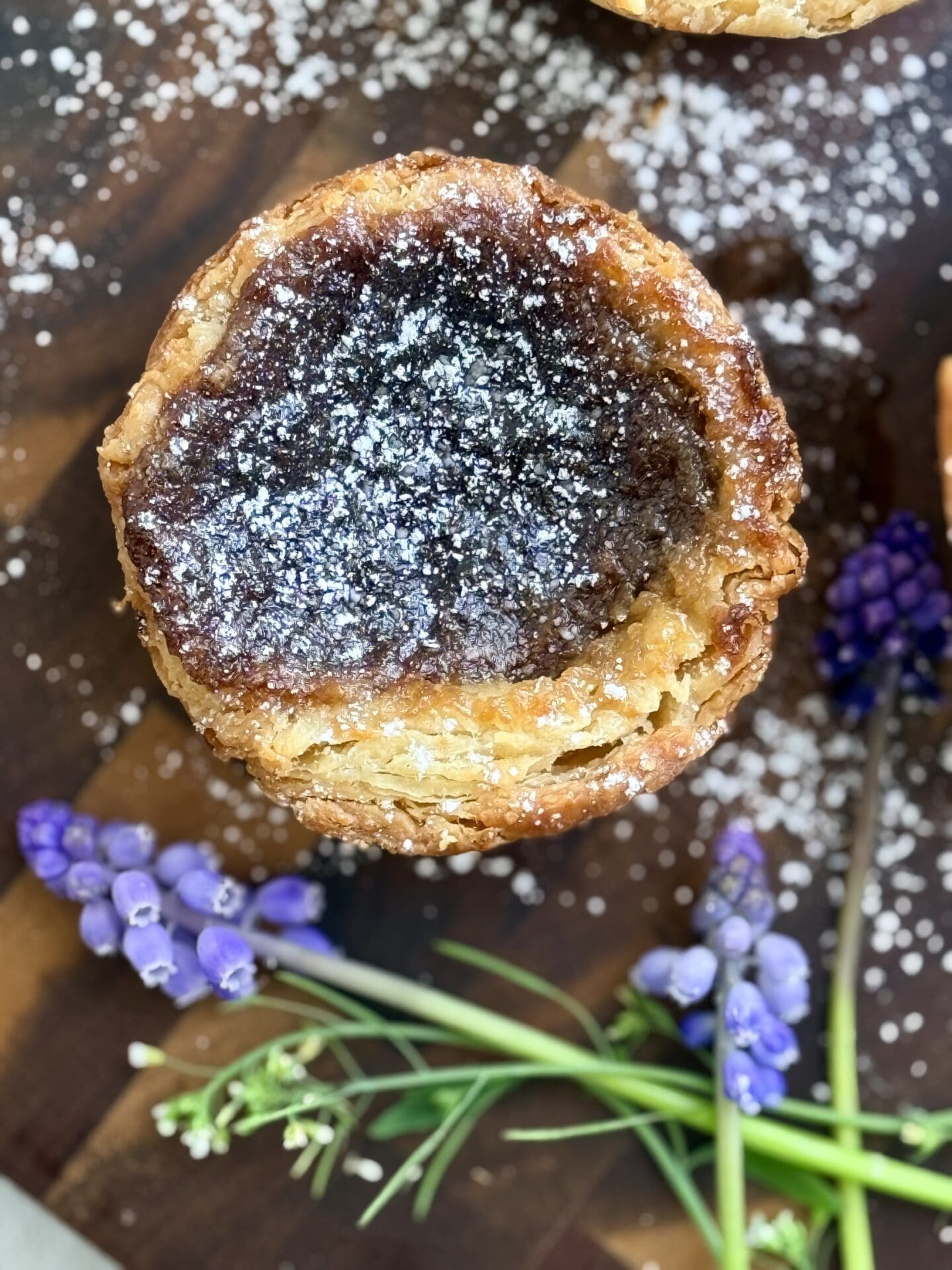
What Goes In Lakehouse Butter Tarts?
Butter tarts are a true pantry recipe, made with just a few simple ingredients, yet yielding a rich, gooey treat that feels anything but basic.
- Butter: Butter is the namesake of a butter tart, featuring in the crisp crust and giving the filling its rich, creamy flavour and signature indulgent texture. I use salted butter in my butter tarts, which enhances the addictive salty-sweet caramel taste.
- Flour: All purpose flour is perfect for the tender crust.
- Granulated Sugar: A small amount of granulated sugar is added to the pastry in these tarts to add a gentle sweetness and enhance the crispness of the crust.
- Brown Sugar: The natural molasses content in brown sugar gives the filling a warm, caramel-like taste. It also contributes to a soft, slightly chewy texture, helping create that gooey, indulgent centre that makes butter tarts so irresistible.
- Kosher Salt: I use Diamond Crystal Kosher Salt in my recipes as it contains less sodium per volume than most other brands. Look for Diamond Crystal Kosher Salt in good grocery stores or buy it online.
- Eggs: The pastry contains an egg yolk for richness, and a whole egg is added to the filling to contribute to the custard-caramel like texture of the filling. It’s important to note that the egg yolk is used cold in the pastry, since it is important that the pastry remains chilled to produce a flaky crust. In the filling, a whole, room-temperature egg is used to help it combine more smoothly. Cold eggs can cause the butter and sugar to seize or clump, leading to a lumpy filling. At room temperature, the egg blends evenly, creating a silky, uniform mixture that bakes into a perfectly smooth, gooey centre. It also helps the filling set more consistently in the oven, giving a slightly caramelized texture.
- Apple Cider Vinegar: Adding a small amount of vinegar to pastry dough helps to tenderize it. The acid slightly weakens the gluten in the flour, which keeps the dough from becoming tough. I use apple cider vinegar in my pastry instead of white vinegar, because it is milder and slightly fruity, and won’t leave a harsh tang in the dough. Don’t worry, you won’t really taste the vinegar. The apple cider vinegar quietly does its job in tenderizing the pastry and contributes lightly to the overall delicious flavour of these butter tarts.
- Vanilla: Adding warm complexity to the sweet, buttery filling, vanilla makes a good butter tart taste truly homemade and memorable.
- Optional – Raisins or Chopped Nuts: I prefer my butter tarts smooth and silky, with a perfectly gooey filling, but many people enjoy adding raisins or chopped nuts for a bit of texture and variation. If you like that classic twist, you can scatter raisins or nuts into the unbaked tart shells before spooning in the filling. Just be sure the raisins are soft and plump and the nuts are fresh. If your raisins seem a little too dry, the easiest way to plump them back up is to soak them in hot liquid. Place the raisins in a bowl and cover them with boiling water, then let them sit for 10-15 minutes until they become soft and juicy. Drain well and pat dry before using. For extra flavour, you can soak them in something like hot apple or orange juice, or even a splash of rum instead of water – this adds subtle depth that works especially well in butter tarts. In the warmth of a lakehouse summer, nuts can quickly lose their freshness and turn stale (or even rancid) if left at room temperature. The best way to keep them at peak freshness is to store them in the freezer. Sealed in an airtight container or bag, nuts will stay fresh, flavourful, and crisp for months, ready to use whenever you need them.
Tips for Making The Lakehouse Butter Tarts
KEEP THE PASTRY COLD
Making great butter tarts is all about balancing cold pastry with a smooth, well-mixed filling. Keeping pastry dough cold is one of the most important techniques in baking because it directly affects structure, texture and how the pastry turns out. Here’s why it matters:
1- It’s all about the flakes: Pastry used in tarts and pies should be tender, golden and flaky, and achieving those results has a lot to do with temperature. Cold, hard, butter stays solid when it’s cut into the flour mixture. The pieces of butter get smaller, and become covered in flour as you cut them in, but they remain clearly visible. During baking, those little buttery pieces melt and create steam pockets, which form flaky layers. If the dough gets warm, the butter melts too early and blends into the flour – resulting in a dense, tough pastry instead of a light, flaky one.
2- Keep it tender: Flour contains proteins that form gluten when mixed with water and stirred about. Warm dough and excessive handling encourages gluten development, which makes dough stretchy and tough. That’s a good thing in bread baking where you knead the dough to create chew, but it’s not a good thing in pastry making when you’re hoping for tender, flaky results. Cold dough slows down the process of gluten development, so keep the pastry cold at every step – and minimize how much you handle it.
3- Easy to handle: Cold dough is firmer and less sticky, making it easier to roll out. Warm dough becomes soft and greasy, making it harder to work with and more likely to tear or stick.
4- Stop the slump: Cold dough holds its structure better in the heat of the oven. If it isn’t cold when it goes in, pastry dough can spread, slump and lose shape before it bakes.
Keeping pastry dough cold in the heat of summer can be a challenge. Rely on your fridge to keep the ingredients cold until just before you use them. If you find the dough is warming up to quickly as you roll and cut, slide the dough on the wax paper onto a tray and put the whole thing in the fridge until cold again.
MAKE THE FILLING AT ROOM TEMPERATURE
We just chatted at length about why keeping pastry ingredients cold is essential for a perfect crust, and now we change course to talk about how using room temperature ingredients in the filling creates smooth, beautifully blended results. When ingredients like butter, eggs and sugar are neither too cold nor too warm, they combine more easily and evenly, creating a cohesive, silky mixture. Cold ingredients can cause the butter to seize or the mixture to curdle, leading to a lumpy texture. Room temperature ingredients blend seamlessly, allowing the sugar to dissolve and the egg to incorporate fully.
SHAPING, ROLLING AND CUTTING THE DOUGH
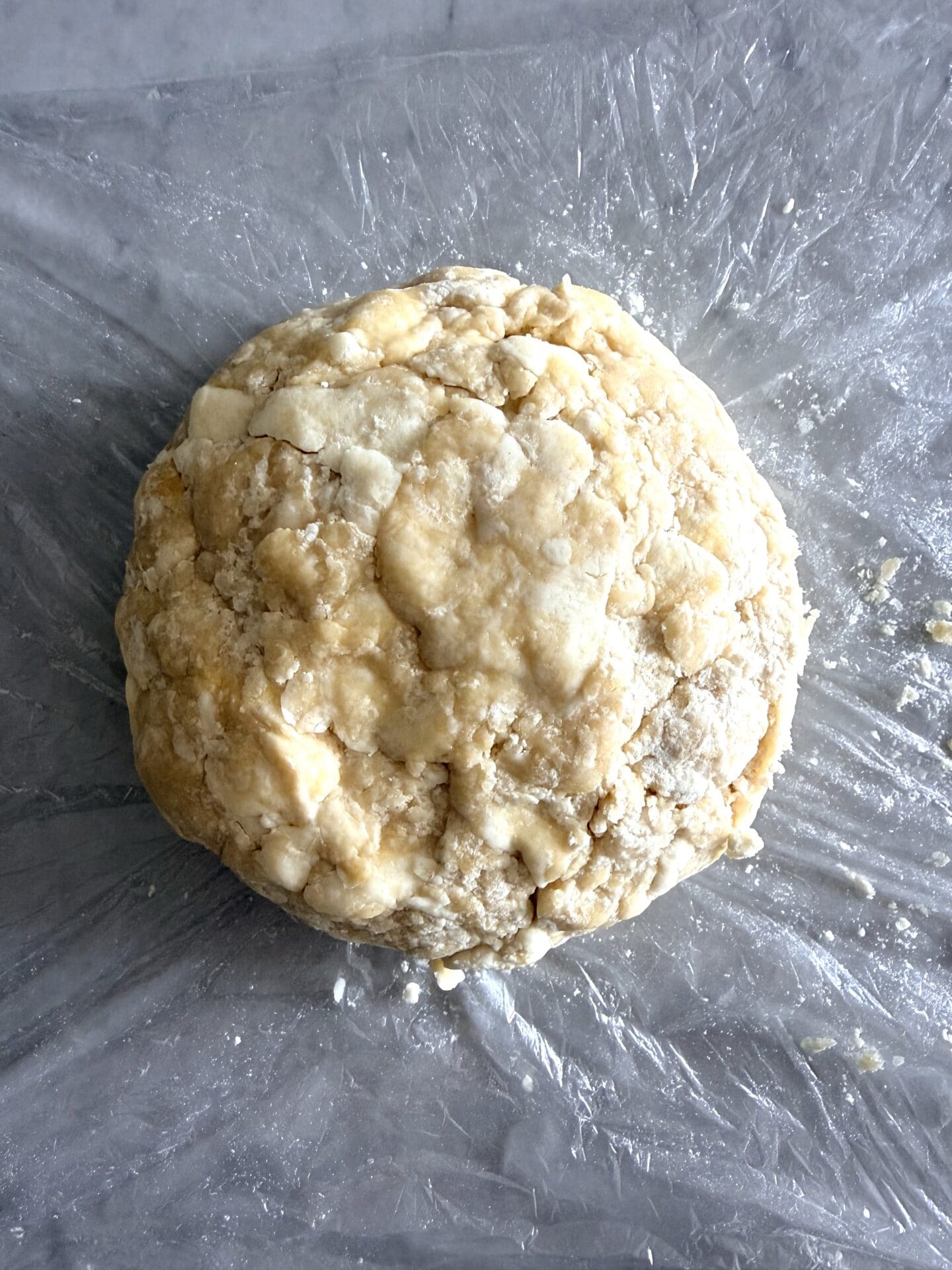
After you mix the wet ingredients and the dry ingredients for the pastry for these butter tarts, you will be left with a shaggy, loose dough. Flatten it into a disc for faster chilling, then wrap it tightly in plastic wrap. Transfer it to the fridge to rest and chill for about 30 minutes. This rest helps the dough hydrate and come together more easily. When you take it out, use your hands to gently shape the plastic-wrapped dough into a more compact disc before rolling it out on flour-dusted wax paper – you should still see those buttery pieces throughout.
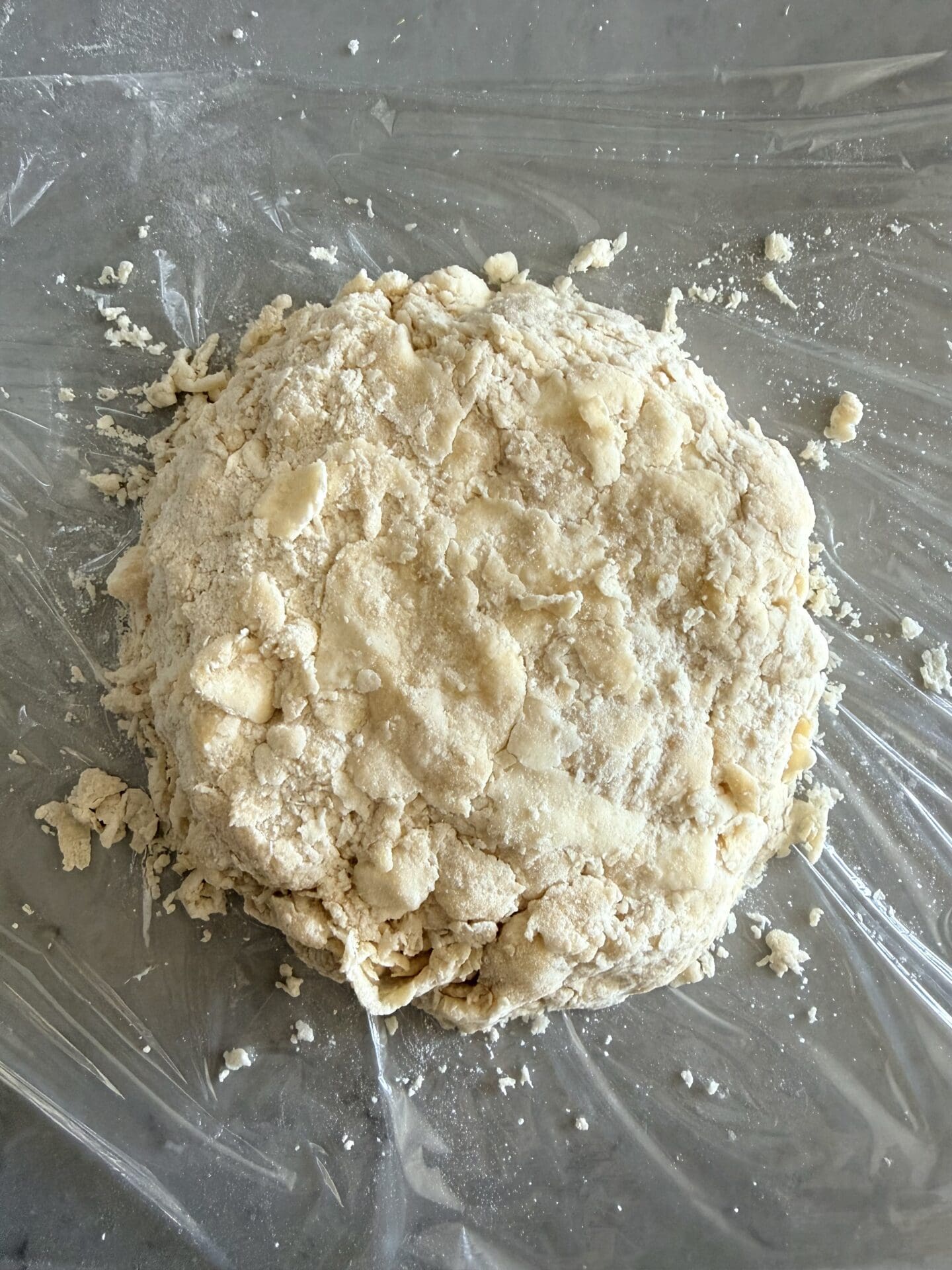
The shaggy pastry dough just after mixing.
The chilled dough after resting and hydrating in the fridge, and being gently shaped.
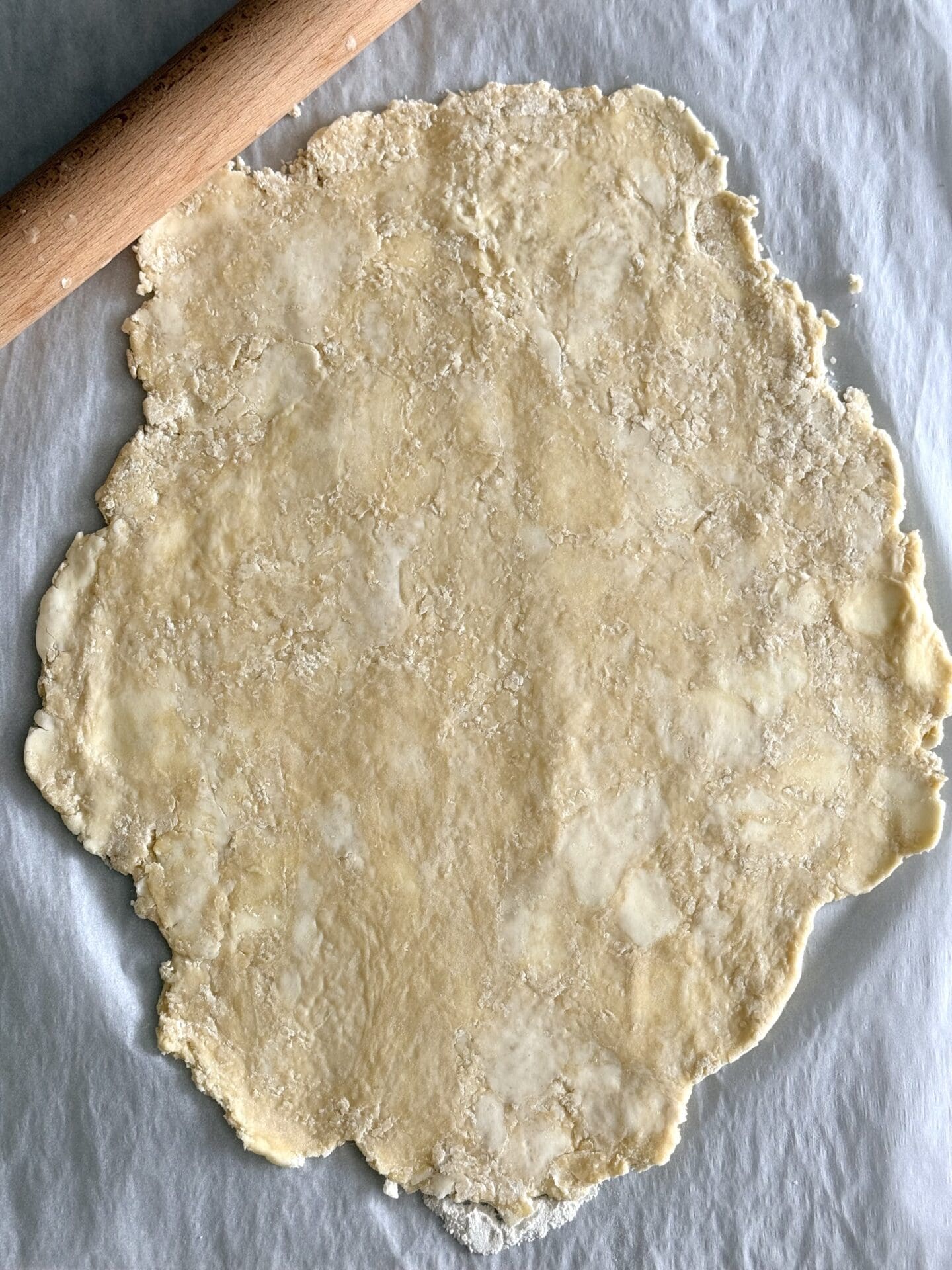
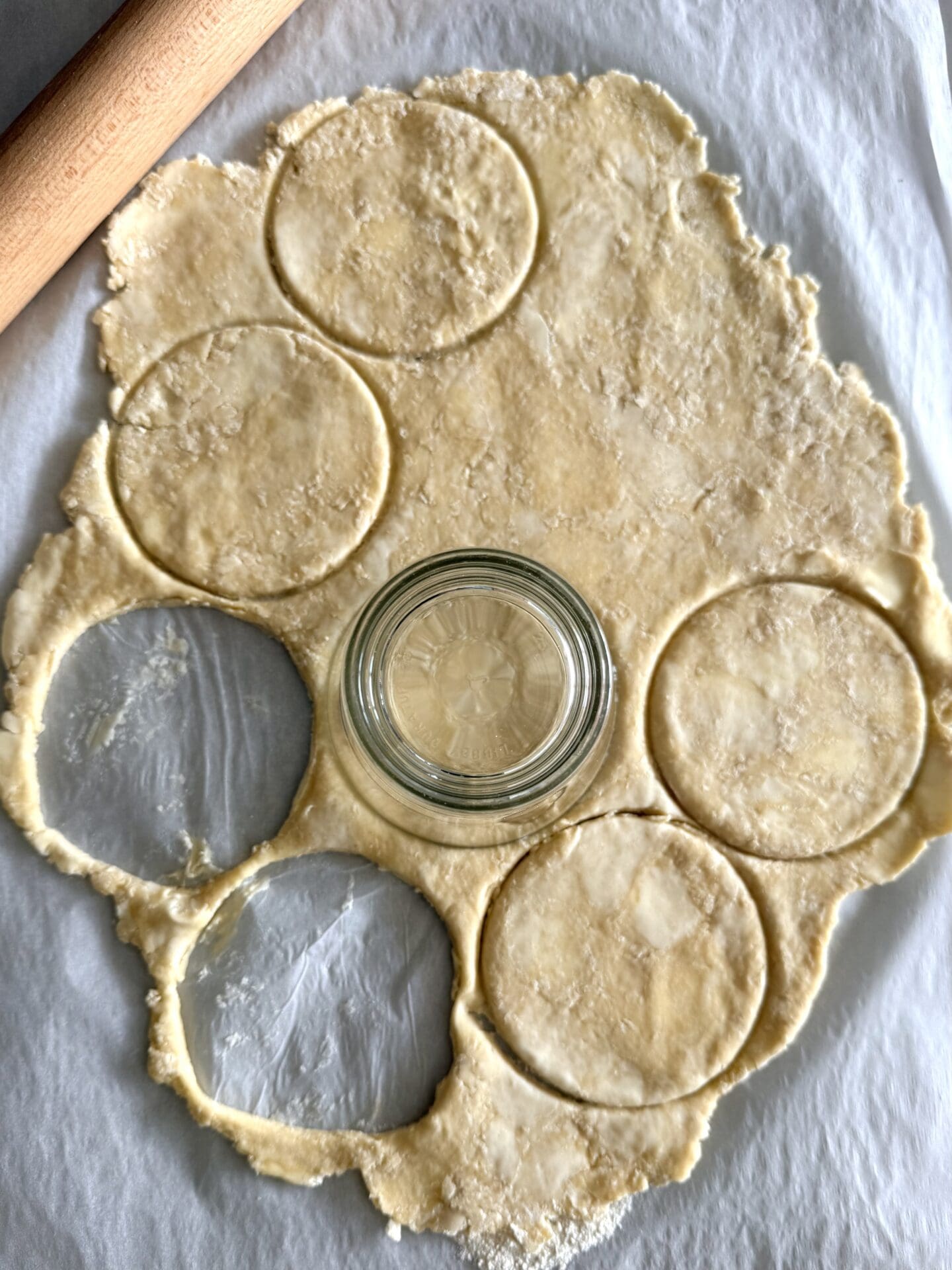
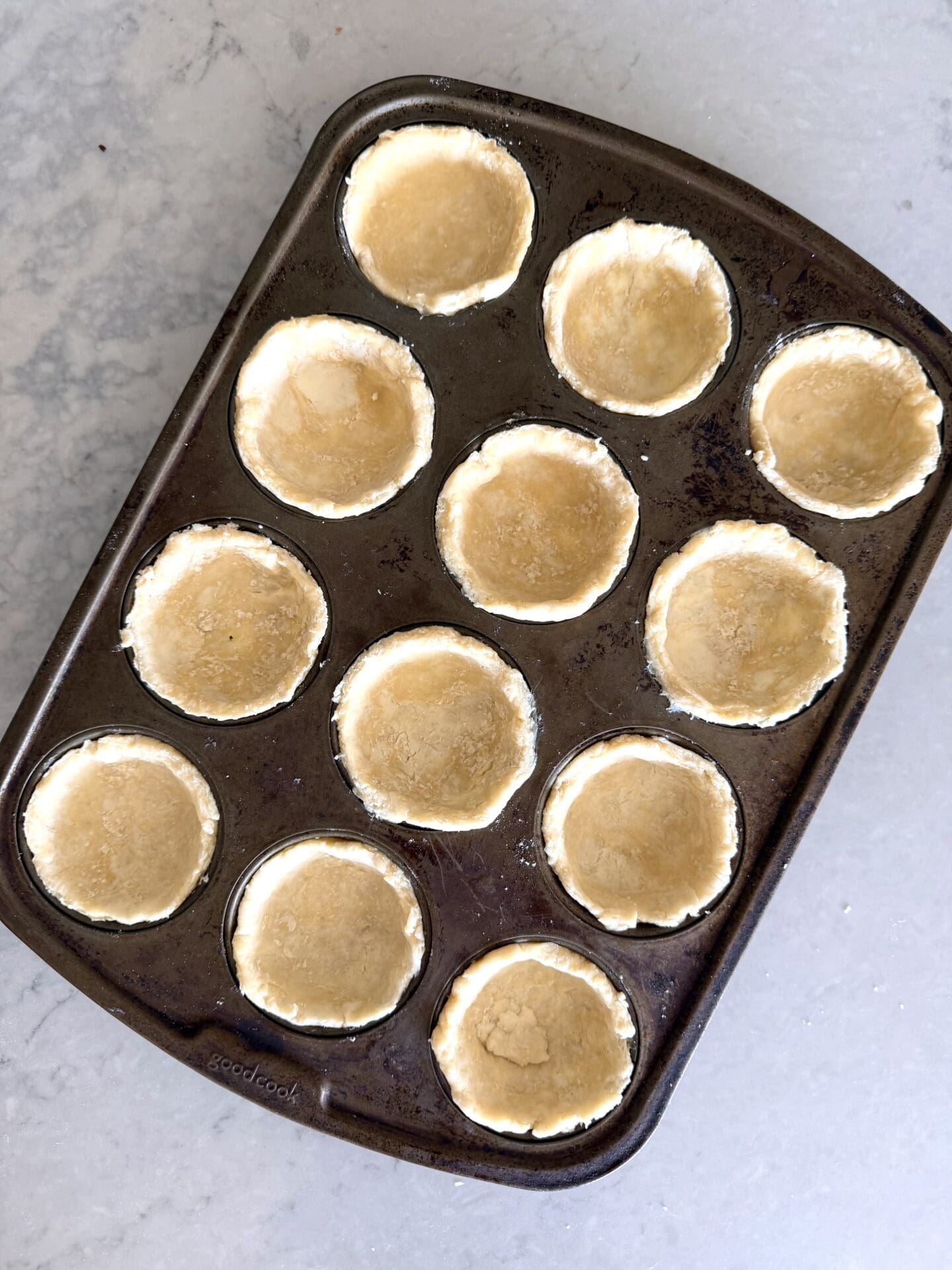
Roll the dough out on a floured piece of wax paper until it is about 1/3” thick. Roll from the centre, stopping just before rolling over the edges to ensure an even thickness. Use the wax paper to turn the pastry to make it easier to roll it out evenly. Pat together any ragged edges or cracks with your finger tips. To cut out rounds, use a 3.5” round cutter. If you don’t have one, like most of us won’t in a cottage kitchen, a drinking glass or a clean can with the same diameter will work just as well. Fit the round cut outs in as closely as possible to minimize rerolling. The more you reroll the dough, the more the butter will get mixed in and the gluten will develop, resulting in less tender pastry. Press the rounds into a standard muffin pan and return them to the fridge to stay cold while you prepare the filling and preheat the oven.
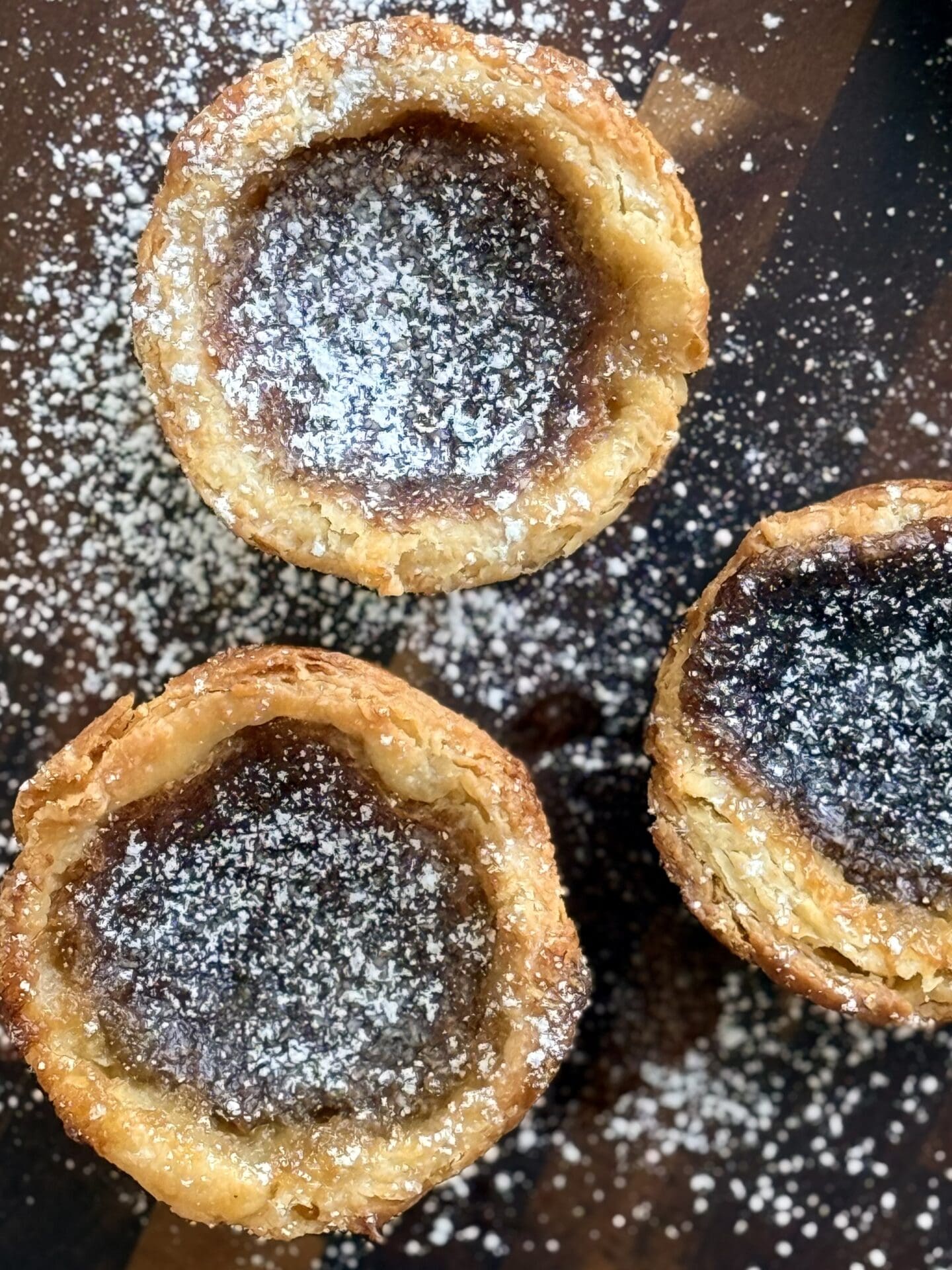
Bake until the butter tarts are lightly golden and the filling is bubbly. Be prepared for the most delightful aroma as the butter tarts bake and the filling caramelizes. As soon as they come out of the oven, run a blunt knife around the edges to loosen them. This is really important, otherwise the sticky filling will cool and adhere to the pan like molten sugar turned to cement, and it will be nearly impossible to get the butter tarts out in one piece. Cool the loosened butter tarts completely in the pan before gently lifting them out.
 SERVING SUGGESTIONS
 SERVING SUGGESTIONS
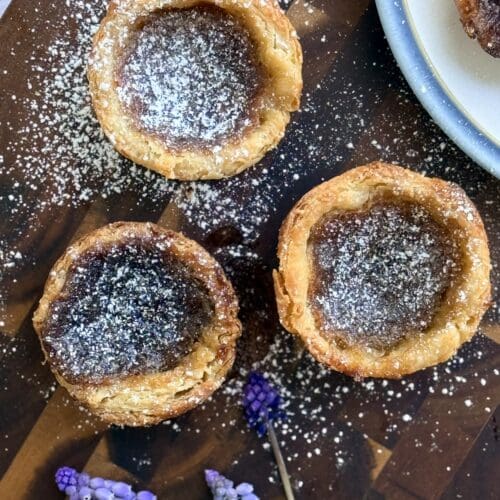
Butter Tarts may be simple, but they make an extraordinary dessert when served with a scoop of good vanilla ice cream or a dollop of rum-spiked whipped cream. Top each tart with fresh blueberries or chopped local peaches just before serving, to add juicy contrast to the rich filling. Since I love to make these at the Lakehouse where I serve most things family-style, I like to serve these butter tarts on a rustic wooden board surrounded by fresh fruit, candied nuts, a good chocolate bar or two, a small dish of flaky sea salt and a bowl whipped cream for a “build your own” dessert. Guests love gathering around shared dessert boards, where everyone can customize their butter tarts with toppings like fresh fruit, crumbled chocolate, crunchy nuts or a sprinkle of sea salt.
DRINK PAIRINGS
 DRINK PAIRINGS
Butter Tarts are rich and sweet, so drinks that balance or complement their flavour work best. Coffee and tea are classic choices, and a big glass of cold milk adds to the nostalgia. A lemony, not-too-sweet ice tea offers balance. For an indulgent ending to a special meal, a small glass of tawny port offers a nutty and light caramel flavours that echo the tarts’ richness. A dark rum Old Fashioned cocktail is a perfect match for butter tarts. The deep caramel and vanilla notes of the rum match the buttery, sweet filling while the bitters balance the richness. Serve it over a large ice cube with a twist of trance peel to add a bright, aromatic contrast – simple, classic and indulgent, just like the tarts themselves.
The Lakehouse Butter Tarts

Ingredients
Pastry:
- 1/3 cup cold water
- 1 3/4 cups all purpose flour
- 2 Tbsp granulated sugar
- 1/4 tsp kosher salt
- 1/2 cup cold butter, cut in small cubes
- 1 cold egg yolk
- 1 Tbsp apple cider vinegar
Filling:
- 1 cup brown sugar, packed
- 1/4 cup butter, at room temperature (soft)
- 2 tsp vanilla
- 1 egg, at room temperature
- 1/2 tsp kosher salt
- 1/2 cup raisins or chopped nuts (optional)
Instructions
Make the Pastry:
- Pour the cold water into a small bowl and place in the freezer to chill while you prepare the other ingredients.
- In a mixing bowl, combine the flour, granulated sugar and 1/4 tsp kosher salt. Cut in the 1/2 cup of cold butter with two dinner knives (or a pastry cutter), until the mixture resembles coarse meal. You want to see small pieces of butter throughout the mixture, about the size of large peas.
- Remove the cold water from the freezer and whisk in the cold egg yolk, and the vinegar. Add the liquid mixture to the flour mixture, and combine using a wooden spoon. Use hands briefly to knead dough together into a ball. Place the ball of dough on a large piece of plastic wrap and flatten it into a disc shape. Wrap the dough up in the plastic wrap and transfer to the fridge to chill for 30 minutes. (Make ahead: Pastry dough can be made a day in advance and stored in the fridge until ready for use. Remove the dough from the fridge 30 minutes before using so it will be easier to roll.)
- Lightly grease a standard size muffin pan with 12 cups and set aside. Lay a sheet of wax paper on a work surface and dust generously with flour. Remove the chilled dough from the fridge, and with it still wrapped in plastic wrap, gently squeeze with your hands to form a tighter disc. Unwrap the chilled dough and place it in the centre of the wax paper. Using a floured rolling pin, roll out the dough until about 1/3” thick. Pat ragged edges or any cracks together with your fingertips. Use a 3 1/2” biscuit or cookie cutter (or drinking glass, or clean can) to cut out 12 circles, re-rolling the dough once if needed. Gently press the circles of dough into the greased muffin pan. Transfer the muffin pan in the fridge to keep the dough cold while you prepare the filling.
- Place a rack in the centre of the oven and preheat the oven to 425F.
Make the Filling:
- In a medium size mixing bowl, cream together the brown sugar and butter with a rubber spatula or wooden spoon. Add the vanilla, the room temperature whole egg and the 1/2 tsp kosher salt. Mix until evenly combined.
Assemble the Butter Tarts:
- Remove the muffin pan from the fridge. If using raisins or nuts, scatter a few into the bottom of each tart shell. Using a small spoon, divide the filling evenly amongst the tart shells. Transfer to the oven and bake for 13 minutes for a runnier filling, and 15 minutes for a firmer filling. Remove from the oven and immediately run a blunt knife around the edges of each tart to loosen. Cool in the pan at least 20 minutes, then use the blunt knife to gently lift the tarts out of the pan. Cool completely on a cooling rack, or serve slightly warm. (Make ahead: Tarts are best the day they are made, but can be made up to 8 hours in advance. Store any leftovers in an airtight container for up to 2 days)
RECIPE NOTES
- These butter tarts are best enjoyed the same day they are made. However, I love recipes that can be made ahead, at least in part – especially at The Lakehouse. To make these butter tarts partially ahead, you can prepare the pastry dough a day in advance. Store it well wrapped in the fridge, and remove it half an hour before you plan to use it so it will roll out nicely. To take it even further, you can roll and cut your dough, and press it into the muffin cups ahead of time. Cover the muffin pan with plastic wrap and keep it in the fridge for up to 24 hours. Mix the filling just before baking, fill the pastry shells and bake as usual. Batches of the uncooked pastry dough can also be made in advance and stored, well wrapped, in the freezer for up to a month. I don’t recommend freezing baked butter tarts as the pastry looses its texture and can become soggy when defrosted.